The portals make Castle Valley look like a rounding error. A median list price of about $775,000 in March 2026 and a median sale of $680,000 in May 2026, on parcels that start at five acres, against a statewide Utah median of $528,124 for a standard suburban lot. Run the price-per-acre math and it reads like a discount hiding in plain sight twenty-five minutes up Highway 128 from Moab.
The math is right. The conclusion is wrong.
Castle Valley's price is not a discount on Moab acreage. It is the market pricing in a set of transaction realities that do not exist on the Wasatch Front, and that do not show up in any listing photo. The single most important document in a Castle Valley purchase is not the deed. It is the parcel's position on the Town's water-rights ledger. Everything else in the due diligence file is downstream of that one line.
The number that isn't on the listing
Castle Valley sits on an unconfined valley-fill aquifer with roughly 5,700 acre-feet of water in a dry period and 6,700 in a wet one. The Town has issued just over 6,900 acre-feet of water rights against that supply. In hydrology terms, the basin is at full appropriation. There is no more water to hand out.
That single fact reshapes what a "5-acre parcel" actually is. The Town of Castle Valley has been designated a Public Water Supplier by the State, and it allocates a portion of its rights to individual lots through a Water Use Agreement and Permit that a property owner must sign before drilling a well. As of the 2026 General Plan draft, 167 lots hold a Town Water Use Agreement, 40 of those also carry state-issued water rights, another 81 lots have only state rights, and 141 lots currently have no water rights at all and are waiting on a future Town allocation.
Read that list again with a buyer's eye. There are essentially three different real-estate products being sold under the same "Castle Valley acreage" label, and the listing photos do not distinguish among them.
Three water positions, three different properties
Lot with a Town Water Use Agreement and a producing well. This is the finished product. Domestic, irrigation, and stock-watering use is already permitted under the Town's allocation framework, and the well log is available for the inspection contingency. This is what most buyers assume they are looking at.
Lot with state-issued water rights but no Town agreement. The paper is there. The infrastructure and the Town side of the paperwork are not. Any buyer here is underwriting a permitting process, not a home.
Lot with no water rights. These parcels exist and they trade. The buyer is betting on a future Town allocation from a basin that is already fully appropriated, and irrigation and outdoor use are limited under the Town's groundwater management framework. About 40% of Castle Valley lots also sit over water hard enough that it must be purified before drinking, per the 2025 Hazard Mitigation Plan, which is a separate cost line from the drilling question.
The point is not that any one of these is a bad buy. The point is that "$680,000 median" averages all three, and the price of a specific parcel only makes sense once you know which of the three you are actually looking at. Ask the listing agent for the water-rights status in writing before you write an offer. If the answer is vague, the answer is number three.
Why the Moab income spreadsheet doesn't apply
Buyers coming from Moab or Spanish Valley almost always show up with a nightly-rental pro forma. Castle Valley is the one address in the region where that spreadsheet is worthless.
Under Ordinance 85-3, short-term rental is defined as any lease of fewer than thirty days to a non-resident, and short-term rentals are not a permitted use anywhere in Town. There is no zone, no conditional use process, no grandfather path. Long-term tenants are the only rental play, and even that runs into the ordinance's home-and-premises-business framework because the Town explicitly does not have and does not intend to have commercial zoning.
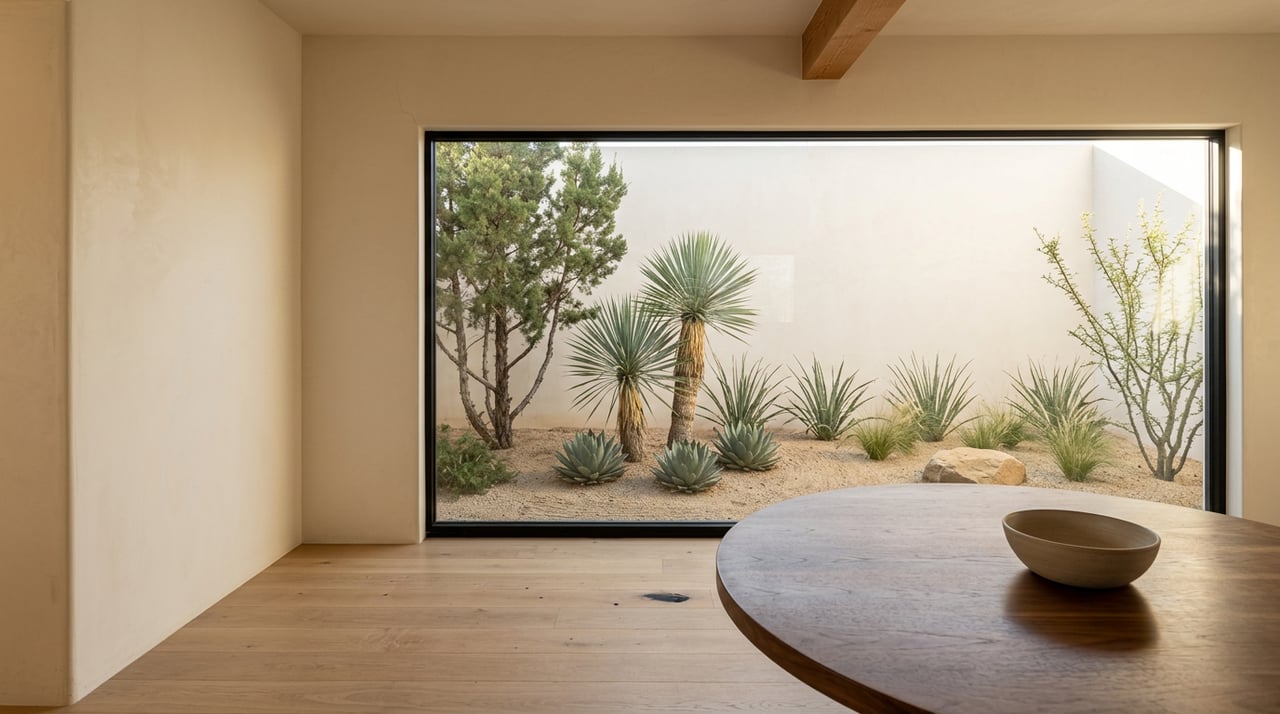
For an investor, that removes an entire revenue thesis. For an owner-occupant, it does the opposite. It is the reason the horizon out the kitchen window stays quiet. The 5-acre minimum in the RAR-1 Rural Agricultural Residential Zone, the ban on commercial signage, the lighting ordinance that protects the Milky Way over Castleton Tower and the Priest and Nuns, and the STR prohibition are one integrated policy. They are what a Castle Valley buyer is paying for. Underwriting the property as if any of them might change is underwriting a different town.
The permit chain nobody mentions until you're in escrow
Castle Valley is the rare Utah address where four separate agencies each hold a piece of the approval flowchart, and none of them will move until the one before it signs off. In practical order:
- South East Utah Health Department approves the septic system design. On a parcel with an existing system, SEUHD must approve it as appropriate for the proposed project.
- Town of Castle Valley issues zoning approval, the well drilling permit through the Town Water Agent, and an electrical permit. Non-routine applications route through the Planning and Land Use Commission and the Town Council, not just the Building Permit Agent.
- Grand County issues the building permit and handles inspections. Grand County will not issue that permit until SEUHD has signed the septic sheet.
- Rocky Mountain Power issues the work order for initial electrical service, which the Town electrical permit references.
The Town's land-use page lays this sequence out, and it is worth reading before making an offer on any parcel where a new build, an addition, or an accessory structure is part of the plan. Land disturbance of one acre or more requires an additional review, and two acres or more requires a Utah-licensed engineer. Watercourse crossings and any earthmoving over 100 cubic yards trigger their own permits. In the Range and Grazing (RG-15) zone that covers unplatted land inside Town limits, septic density is capped at one tank per fifteen acres, which effectively rules out a second dwelling on most parcels regardless of acreage.
None of this is unusual for rural Utah. What is unusual is how much of it is administered by the Town itself rather than the county, and how tightly the Town controls its own workflow. That is the friction the price reflects.
Reading the May 2026 numbers correctly
Median sale of $680,000, 58 days on market, and a 97.1% sale-to-list ratio in May 2026 tell a coherent story once the water-rights framework is in place. The 58-day median is roughly a week longer than the Utah statewide median of 52 days for a much simpler product. The sale-to-list ratio is a shade below the statewide 98.6%. Both numbers are consistent with a market where every serious buyer spends a week or two doing water and septic diligence that a Salt Lake or Draper buyer never has to do.
Inventory is thin because the total housing stock is small. The Town platted 448 five-acre residential parcels on the loop road back in 1973 and incorporated in 1985, and the 2020 Census counted 347 residents. When only a handful of homes list in any given month, one atypical closing moves the median hundreds of thousands of dollars. Treat the monthly figure as a data point, not a trend.
The trend that does hold up is the spread between "turnkey with water and a well" and "acreage with a promise." That spread has widened as the Town has tightened its allocation process. A buyer who can distinguish the two, and who is willing to hold the closing open long enough to verify the paperwork, is buying a genuinely different asset than the one on the listing sheet.
FAQ
Can I split a five-acre parcel into two building sites? Not under the current RAR-1 zone. Five acres is the minimum lot size under Ordinance 85-3, and the RG-15 range zone requires fifteen acres per septic tank.
Is Starlink or fixed wireless the norm for internet? For most parcels, yes. Cellular coverage in the valley is limited, and residents typically run fixed wireless or Starlink for a working connection.
What does Firewise status mean for insurance and diligence? Castle Valley has held Firewise Community recognition for more than twenty years through the Castle Valley Fire District, which is a separate taxing entity from the Town. Ask your carrier what defensible-space work the property has on record before binding coverage.
How is culinary water handled on lots without a well? Some owners haul water. Confirm the arrangement and any storage cistern capacity in writing before removing contingencies.
If you are underwriting a Castle Valley parcel, or preparing one for sale, the water-rights position is the first document to pull and the last one to compromise on. Nikole Andersen Real Estate works this market parcel by parcel, and we are happy to walk a specific address through the ledger before you write or accept an offer. Contact Nikole for a complimentary market consultation.