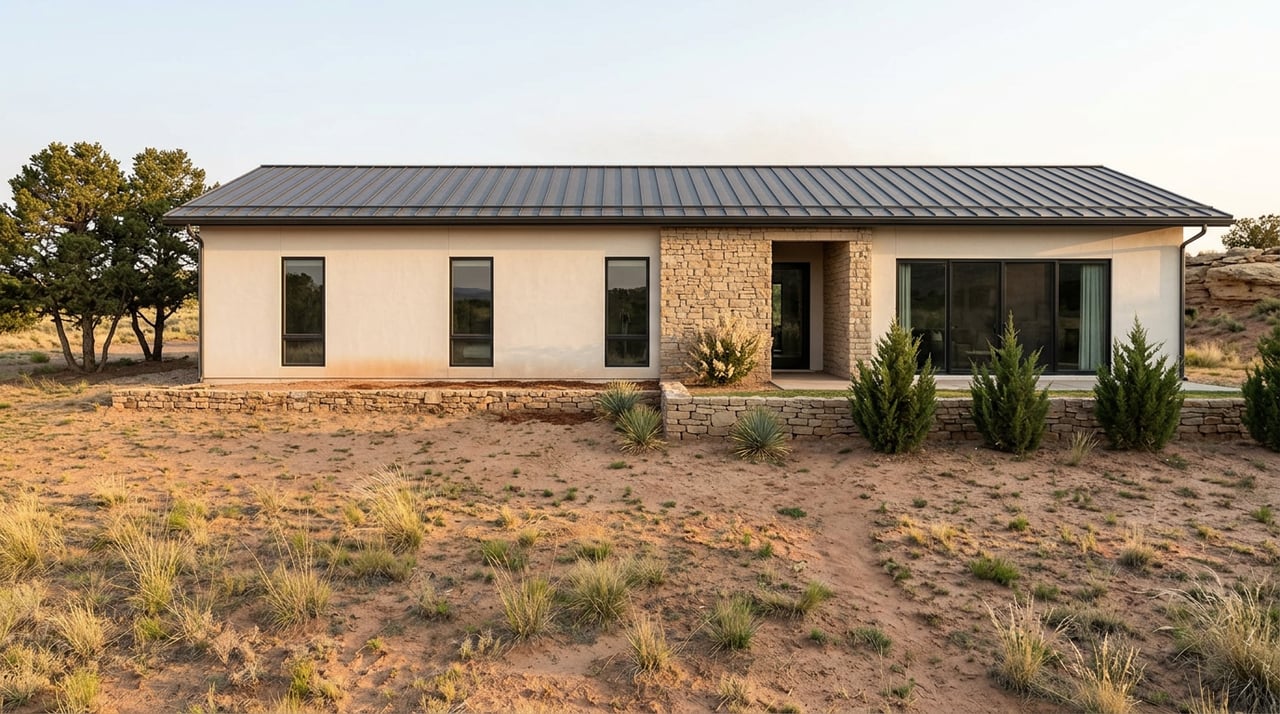
Two five-acre parcels in Castle Valley can list within a few thousand dollars of each other and still represent completely different purchases. One sits over the valley-fill aquifer, has a well that produces cleanly, and connects to a septic system already in the ground. The other sits closer to Porcupine Rim, taps the Cutler Formation instead, and might not produce enough water to justify the cost of drilling at all. The listing sheet won't tell you which one you're looking at. The well log will.
That distinction matters more here than almost anywhere else in Grand County, because Castle Valley doesn't run water the way a normal Utah town does. There's no pipe network delivering treated water to every meter. The town owns the water rights, but it hands them out to individual, privately drilled wells, one lot at a time. It's an arrangement rare enough that the U.S. Environmental Protection Agency designated the Castle Valley watershed a Sole Source Aquifer in 2001, a distinction the town itself notes is uncommon for an area with this kind of dispersed, well-by-well distribution system. If you're comparing Castle Valley acreage to land in Moab or anywhere along the Wasatch Front, that's the first thing to unlearn: acreage here isn't the variable that decides value. Water is.
The Aquifer You're Actually Buying Into
The Town of Castle Valley holds four water rights with priority dates stretching from 1962 to 1968, and it administers them under a Water Use Ordinance that requires a signed Water Use Agreement and Permit for each lot before a well goes in. That's the paperwork side. The physical side is where things get uneven.
Water in the valley comes from two different sources depending on where you're standing. Lots on the valley floor typically draw from the valley-fill aquifer. Lots closer to Porcupine Rim often hit the Cutler Formation instead, which tends to carry significantly more dissolved solids. As that water moves down-valley and merges with the valley-fill supply, the mineral content compounds, which means water quality can shift again depending on where in the valley a given lot sits. Two wells a few hundred yards apart can produce water with meaningfully different taste, hardness, and treatment needs. None of this shows up in square footage or an acreage total. It shows up in a water test.
When the Well Doesn't Produce, You Get a Cistern Instead
Not every lot in Castle Valley has a well, and that's not always a red flag. Some property owners near Porcupine Rim decided against drilling altogether and instead installed cisterns, filled by tank trucks that haul water in from Moab. It's a real, ongoing cost, but for hillside terrain where a well might run around $20,000 and still not produce reliably, hauling water can be the more predictable option. The town has floated the idea of eventually serving these hillside lots with non-potable water delivered by a town tank truck, which would lower delivery mileage and cost for owners, but that's a proposal, not a service currently in place.
If you're evaluating a Castle Valley property and see "well in place" on the listing, that phrase alone doesn't confirm production, quality, or even that the well was ever tied to a town-issued permit. Some private water rights in the valley predate the town's incorporation entirely and were issued directly by the Utah Division of Water Rights before Castle Valley began administering water itself. Those older rights can carry different obligations than a standard town permit, which is exactly the kind of detail a title search alone won't catch.
What the Price Bands Actually Reflect
Land and home prices in Castle Valley track infrastructure almost as tightly as they track square footage or view corridor. As a rough guide to what buyers are seeing on the ground right now:
| What you're buying | Typical price band | What usually comes with it |
|---|---|---|
| Bare land, 5-acre standard lot | $200,000 to $400,000 | Varies widely by access, confirmed water rights, and view corridor |
| Modest home on 5 acres | High $600,000s to low $900,000s | Established well or cistern arrangement, existing septic |
| Custom home with named-formation views (Castleton Tower, Adobe Mesa) | $1.2 million and up | Premium view corridor, typically a proven producing well |
The spread inside each band is almost always a water-and-access story. A lot advertising a working well with an underground cistern and frost-free hydrants is worth more than an identical acreage with no confirmed water source, even before either has a house on it. Zoning here is rural residential, built around five-acre lots that generally allow horses, chickens, and goats, so land buyers are frequently comparing not just price per acre but usable water for both a household and any animals they intend to keep.
The Rental Income That Doesn't Exist Here
Twenty-five minutes down Highway 128 along the Colorado River, Moab runs on a nightly rental economy where a transferable rental license is treated as a scarce, valuable asset baked into a home's price. Castle Valley operates under the opposite rule. The town prohibits nightly and short-term rentals town-wide. There's no grandfathered exception path the way there is in some corners of Moab's zoning code. Buyers coming from a Moab mindset, where an investment property's value is partly a rental-income calculation, need to reset that math entirely once they cross into Castle Valley. Any income strategy here has to be built around long-term tenants, not nightly guests.
The Administration Is Changing, Which Matters for New Buyers
Castle Valley's water system isn't static, and a few developments are worth knowing before you assume today's arrangement will look the same in a few years. The town's Water Advisory Committee, made up of longtime residents including water rights agent John Groo, put together a draft Water Management Plan that went to a public workshop in early 2025. Groo, who has served as the town's water rights agent, announced he plans to retire at the end of 2026, which means the person administering individual well permits and water use accounting is set to change during the same window many buyers will be closing on property.
The plan under discussion also raises the possibility of metering individual wells going forward, a step the town has acknowledged current water rights holders were never warned might happen. If it moves ahead, the cost of installing meters would likely fall on lot owners, not the town. None of this is finalized, but it's a live conversation, and it's the kind of detail that only shows up if you're asking the town directly, not reading a listing description.
Land supply in the valley is also shaped by conservation decisions outside individual lot sales. In late 2025, the Canyonlands Field Institute placed a conservation easement on the 157-acre Castle Rock Ranch along River Road before selling it back to its former owner, permanently restricting that land from subdivision or development. It's a reminder that some of the valley's most visible open land, the fields stretching toward Parriott Mesa and the La Sal Mountains that most people see on the drive in, isn't part of the buildable inventory and never will be again.
Before You Write an Offer
- Pull the well log and request a current production test, not just a statement that a well exists
- Confirm whether the property's water comes from a town-permitted well, a pre-incorporation private right, or a cistern-and-haul arrangement
- Ask which aquifer the well draws from and request a recent water quality test, especially for lots near Porcupine Rim
- Verify the septic system is permitted and sized for your intended use, since the town does not provide wastewater management
- Confirm current animal-unit limits if you're planning to keep horses or other livestock on a standard five-acre lot
- Do not budget for nightly rental income; confirm with the town clerk that short-term rental is prohibited for your intended use
- Check current road conditions and access, since Castle Valley Drive is the primary route in and out and has undergone recent culvert work
FAQ
Does Castle Valley have city water like a typical town? No. The town owns water rights but delivers them through individually permitted private wells rather than a piped municipal system, an unusual enough setup that the EPA designated the local aquifer a Sole Source Aquifer in 2001.
Can I operate a short-term rental in Castle Valley? No. The town prohibits nightly and short-term rentals town-wide, unlike neighboring Moab.
How far is Castle Valley from Moab? About 25 minutes via Highway 128, one of the more scenic drives in the state along the Colorado River.
Is well water quality the same across the valley? No. Wells drawing from the valley-fill aquifer generally differ from those tapping the Cutler Formation near Porcupine Rim, which tends to carry more dissolved solids. Always request a current water test before buying.
Castle Valley rewards buyers who do the homework a standard suburban purchase doesn't require. The acreage and the view are what draw people in, but the well log, the water rights history, and the zoning realities are what actually determine whether a property works for the life you're planning to build on it. If you're comparing parcels here, or trying to understand what a specific water rights history means for your plans, Nikole Andersen Real Estate can walk through the details with you before you write an offer.